
AAU and European Union Launch €60 Million SRiA Initiative to Transform African Higher Education
September 25, 2026
Rethinking How Excellence is Measured in African Higher Education
September 26, 2026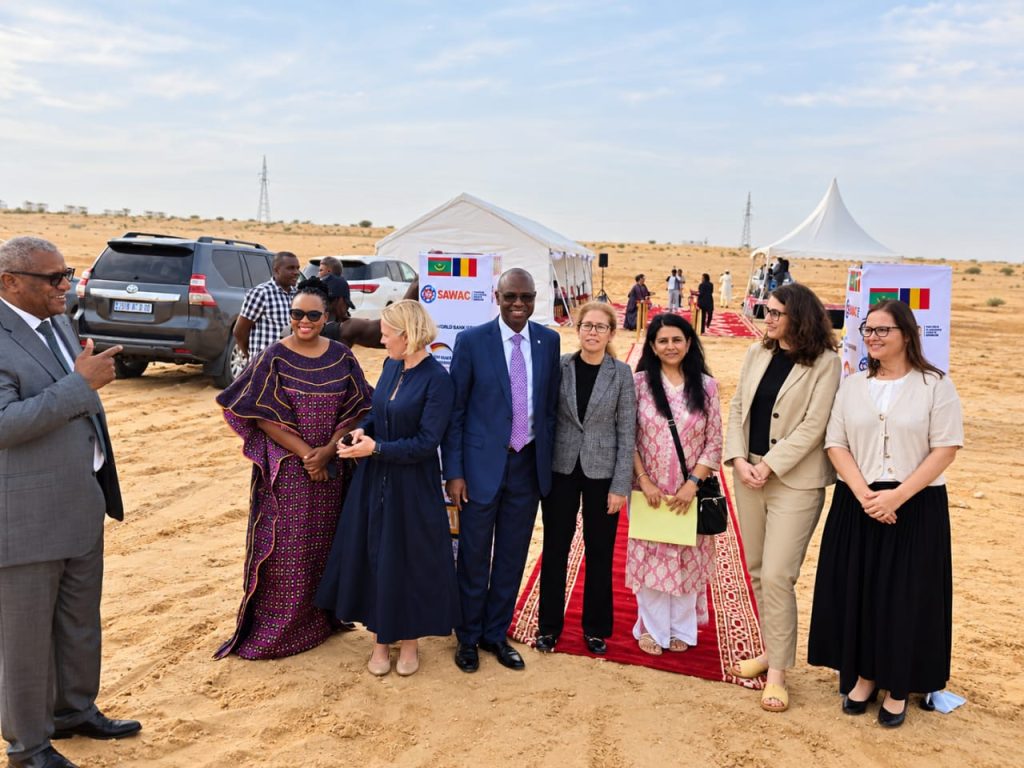
A vision for stronger, more connected and resilient education systems across the Sahel is taking physical shape.
The sod-cutting ceremony for the permanent headquarters of the EduSahel Institute in Mauritania, held on Monday, September 21, 2026, in Nouakchott, marks an important milestone in the implementation of the Sahel Regional Engagement for Learning and Collaboration in Education (RELANCE) project. More than the start of construction, the ceremony signals a transition from institutional preparation towards establishing a permanent regional platform for education research, capacity development, policy dialogue and cooperation.
EduSahel is being developed as a regional intergovernmental education institute with three core missions: applied research, training, policy advice and knowledge sharing. Its ambition is to become a regional think tank and training centre that helps participating countries strengthen education systems, develop professional capacity and translate regional knowledge into practical solutions. EduSahel is designed to respond to this need by providing a regional platform where countries can generate and share evidence, strengthen education leadership, exchange experiences and develop solutions to common challenges.
Through applied research, the Institute will address priority issues including curriculum innovation, learning assessment, ICT in education, adult education, informal apprenticeship, governance and education financing. It will also facilitate exchanges among policymakers, education managers, teacher organisations, parent groups and other stakeholders, enabling countries to learn from one another’s experiences.
Capacity development will be another central pillar. EduSahel will provide continuous professional development for officials and technical specialists responsible for education planning, change management, school management and ICT-enabled decision-making, while also contributing to strengthening teacher-training systems.
Speaking at the sod-cutting ceremony, the Regional Coordinator of the RELANCE project, Mr Abass Syllas, described EduSahel as a regional platform for cooperation and the development of shared solutions. The Institute is expected to contribute to the development of 1,500 education managers and 7,500 trainers and teachers, while supporting education reforms, innovative approaches, learning assessment, public policy evaluation and strategic advice to governments.
These ambitions reflect a broader objective: building the human and institutional capacity required to sustain education transformation beyond the lifespan of individual projects. EduSahel is also closely connected to another major pillar of RELANCE: the Regional Open School, which is designed to expand flexible learning opportunities for out-of-school and vulnerable young people. EduSahel will help participating countries capture evidence and lessons emerging from these approaches, strengthen the capacities required to implement them and support the integration of successful solutions into national education systems. This relationship is central to the RELANCE approach. Promising solutions developed through the Regional Open School can be transformed into knowledge, training, policy advice and institutional practice through EduSahel. In this way, successful approaches can move beyond individual interventions and contribute to wider national education policies and reforms.
The construction of EduSahel’s permanent headquarters therefore represents much more than an infrastructure investment. It provides the physical foundation for an institution intended to sustain regional learning, policy innovation, professional development and education reform.
Important institutional foundations are already being established. According to the Regional Coordinator, Chad and Mauritania have ratified the Convention establishing EduSahel, while the necessary headquarters agreements have been signed. The location of the permanent headquarters close to the University of Nouakchott and its institutes will also provide access to an established academic environment and opportunities for collaboration. Importantly, EduSahel’s activities will not wait for construction to be completed. The Institute is expected to begin operating from temporary premises while its permanent headquarters is being developed.
The next phase will focus on institutional and operational readiness, including recruiting management, preparing initial training programmes and providing the technical support required to establish EduSahel as a functioning regional institution.
The Association of African Universities (AAU), as the regional coordinating body for RELANCE, has an important role in supporting this transition.
During the establishment phase, AAU will initially manage the relevant project component and provide technical assistance for the establishment and functioning of EduSahel. This includes supporting the institutional establishment process, recruitment of the first Director General and key personnel, mobilisation of subject-matter expertise, and development of the governance and operational structures required for the Institute to function effectively. AAU’s role during this formative period will help bridge the transition from the project’s institutional vision to an operational regional body capable of progressively assuming its responsibilities.