

Sod-cutting ceremony in Mauritania marks a new phase in building a regional institution for stronger education systems, shared knowledge and lasting reform across the Sahel
September 25, 2026
AAU, AfLIA and SPARC Africa to Convene Continental Virtual Conference on Diamond Open Access and Knowledge Sovereignty
October 1, 2026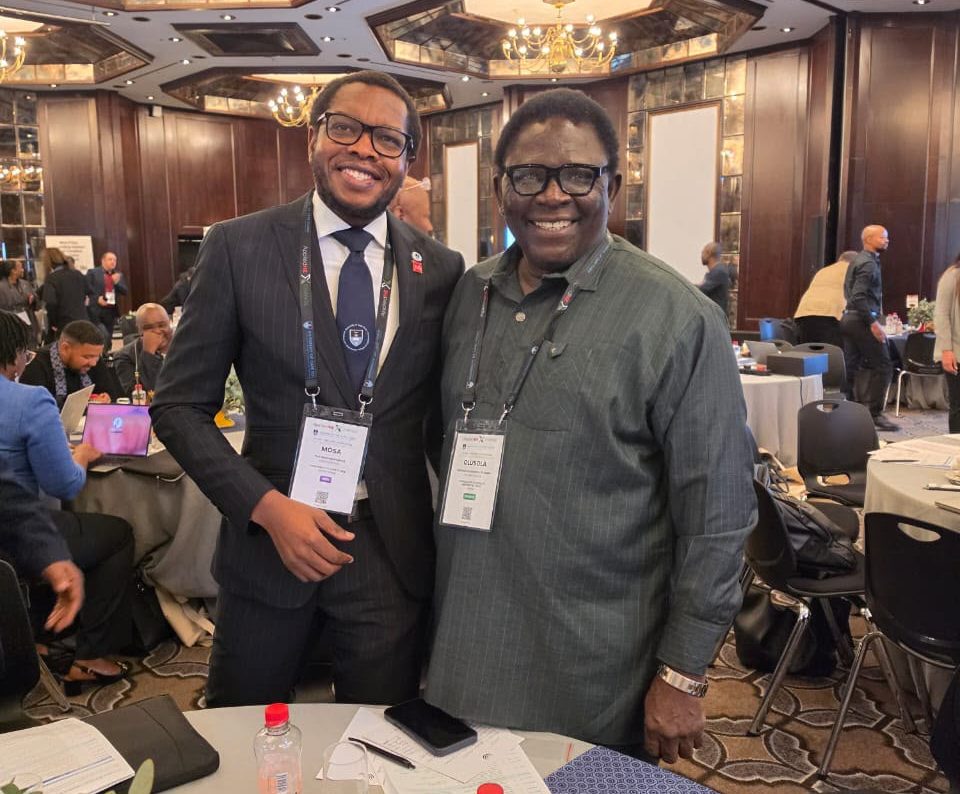
African universities are increasingly being called upon to do more than produce graduates and generate research. They are expected to contribute to innovation, entrepreneurship, public policy, industrialisation, social transformation and the broader development of the continent. As these expectations grow, an important question is emerging which is: How should excellence in African higher education be defined and measured?
This question formed the focus of a presentation by the Secretary-General of the Association of African Universities (AAU), Professor Olusola Bandele Oyewole, titled Defining Excellence for African Higher Education, delivered at the University of Cape Town.
The presentation argues that Africa must first define what excellence means within its own developmental context before determining how its universities should be assessed. It calls for a new approach that combines global standards with African priorities and looks beyond conventional measures of academic output to consider relevance and impact.
Beyond conventional measures of university performance
Global university rankings have become an important reference point for universities seeking international visibility, partnerships, funding and talent. The presentation acknowledges these benefits, noting that ranking visibility can contribute to institutional recognition, research partnerships and the attraction of academic talent.
However, it also questions whether existing ranking systems adequately capture the contributions African universities make to their societies. Conventional indicators often focus on areas such as publication output, citation impact, teaching environment, international outlook, industry income and academic reputation. According to the presentation, these indicators capture aspects of university performance but do not necessarily measure developmental impact.
For example, research that directly informs public policy or addresses a pressing local challenge may have significant societal value without generating the same citation impact as research on internationally prominent topics. Similarly, innovation can take the form of start-ups, technology transfer, job creation and support for small and medium-sized enterprises, which may not be adequately reflected in conventional ranking measures.
The presentation therefore raises a fundamental question that: Are African universities being measured against priorities that reflect the societies they serve?
Defining excellence from an African perspective
Africa’s higher education systems operate across 54 countries, diverse languages, varying resource environments and different development contexts. Within this diversity, the presentation proposes that excellence should take account of universities roles in their communities and in the continent’s wider development.
Among the questions, an African approach to measuring and ranking excellence should consider asking are how effectively universities develop the human capital Africa needs, how relevant their research is to African priorities, how much innovation and enterprise they generate, how their research influences public policy, how they contribute to continental integration and how they preserve and deploy African knowledge.
This perspective places purpose at the centre of excellence. Rather than assessing universities solely by the volume or visibility of their outputs, it asks what those institutions contribute to the societies and communities they serve.
A broader understanding of university excellence
The presentation outlines eight areas that could form part of an African understanding of university excellence which are academic excellence, research excellence, innovation, societal impact, graduate success, Africanisation, internationalisation and institutional sustainability. These areas reflect a wider conception of the university’s role.
Academic excellence encompasses teaching quality, curriculum relevance and learning outcomes. Research excellence considers both research quality and its relevance to African development challenges. Innovation looks at patents, start-ups, technology transfer and industry partnerships, while societal impact includes policy influence, community engagement, agricultural transformation and public health.
Graduate success extends the conversation beyond graduation rates to what graduates go on to achieve through employment, entrepreneurship, leadership and public service. Africanisation recognises indigenous knowledge, African languages and cultural preservation, while internationalisation considers partnerships, mobility, joint degrees and cross-border research collaboration. Institutional sustainability encompasses governance, financial resilience, digital transformation and environmental sustainability. Together, these dimensions point towards a model of excellence that is concerned not only with what universities produce, but also with what those outputs enable them to achieve.
Towards an African University Excellence Index
Following this argument, the presentation moved towards a proposed new approach to measuring excellence through an African University Excellence Index (AUEI), a continental initiative intended to provide an independent, evidence-based and African-owned approach to assessing university excellence rather than simply reproducing the structure of conventional league tables, the proposed model seeks to provide a more comprehensive picture of institutional strengths. Its proposed seven dimensions are Overall Excellence, Research Excellence, Innovation Excellence, Community Impact, Digital Readiness, Sustainability, and Employability and Graduate Success.
The proposed approach is described as “Profiles, Not League Tables.” Under this model, universities would be able to demonstrate different areas of strength instead of being reduced to a single institutional position. The presentation illustrates how one university could emerge as particularly strong in research and digital transformation, while another could demonstrate greater strengths in community impact and graduate success.
Building a shared continental framework
For such an initiative to be credible, the presentation recognises that methodology, governance and data quality will require careful attention. It proposes a governance architecture involving a Continental Steering Council, a Technical and Methodological Committee and an Institutional Participation Network. The proposed structure would bring together universities, governments, quality assurance agencies, industry and student stakeholders while maintaining technical oversight of indicators, data standards and methodology.
The presentation also identified challenges that would need to be addressed, including inconsistent data, uneven institutional capacity, funding constraints, potential political interference, resistance to transparency and methodological disagreements.
The proposed development process therefore begins with broad stakeholder consultation, followed by framework development, piloting, independent validation and, ultimately, continental publication.
Shaping the future of African higher education
The conversation around excellence ultimately is a conversation about the future direction of African higher education. The proposed AUEI offers one possible framework through which African universities could articulate and demonstrate the breadth of their contributions from research and innovation to community impact, graduate outcomes and institutional sustainability.
As the presentation emphasises, Africa does not necessarily need to reject global rankings. Instead, there is a case for complementing them with an approach that recognises the continent’s priorities and the diverse ways in which universities contribute to transformation.
The next stage, as outlined in the presentation, will require sustained engagement among universities and other stakeholders to determine what should be measured, how it should be measured and how the resulting framework can command confidence across the continent. For African higher education, defining excellence may therefore be more than a question of measurement. It is an opportunity to articulate what African universities are expected to contribute and how that contribution should be recognised.