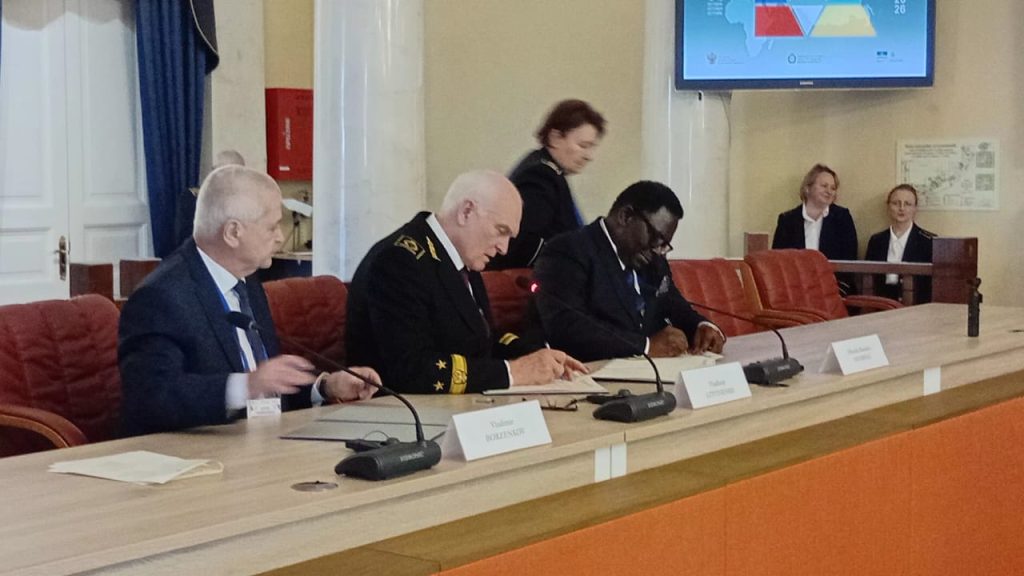
Association of African Universities Appoints Dr. Thomas Philip Songu as Head of Information Technology
July 6, 2026
From Continental Ambition to University Action: AAU Mobilises Higher Education for Africa’s Education Transformation
July 17, 2026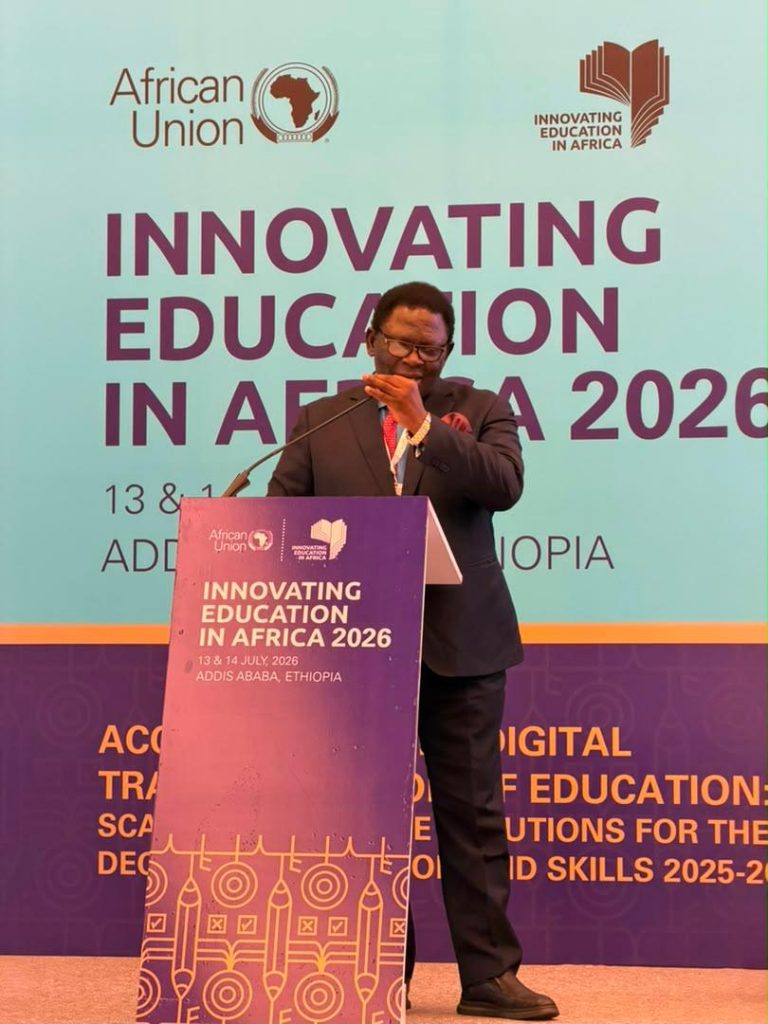
African universities have traditionally been viewed primarily as institutions for teaching and knowledge transmission. But as the continent enters a new decade focused on education, skills development, science, technology and innovation, there is a need to rethink this role.
Universities must do more than produce graduates. They must create knowledge, nurture talent, develop innovative solutions, support entrepreneurship, and contribute directly to Africa’s social and economic transformation.
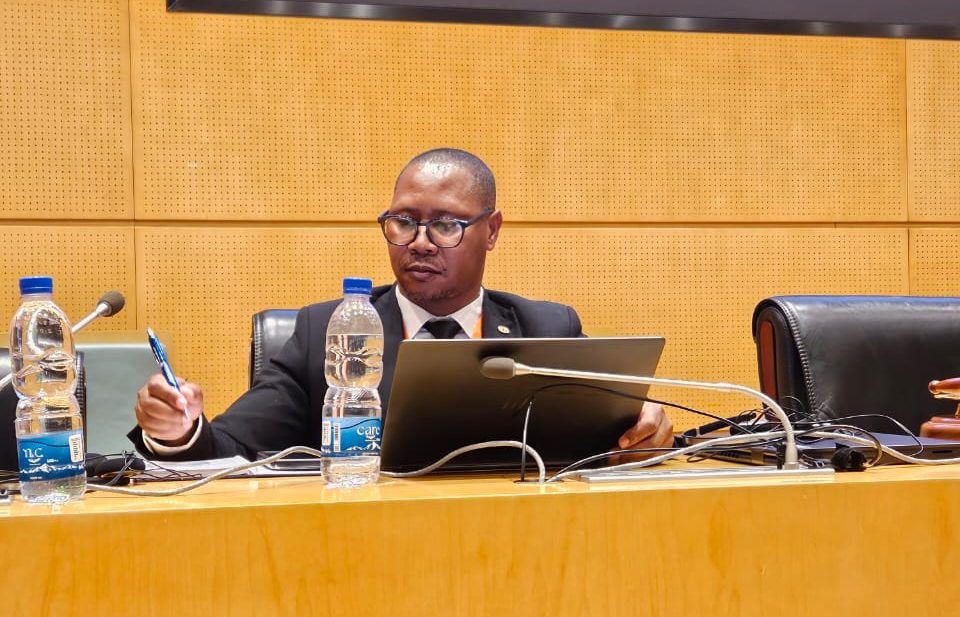
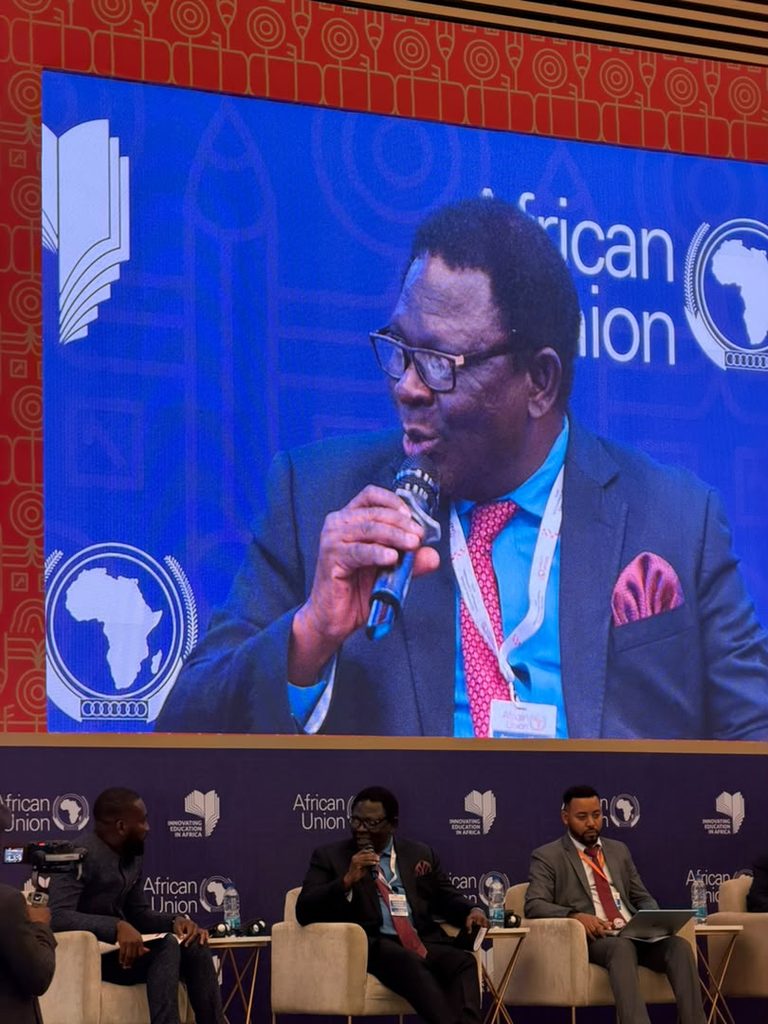
This was at the heart of the keynote address delivered by the Secretary General of the Association of African Universities (AAU), Professor Olusola Bandele Oyewole, during the African Union Commission Policy Dialogue, Exhibition and Campaign for a Digital Future, held from 13–14 July 2026 at the African Union Commission Headquarters in Addis Ababa, Ethiopia.
Held under the theme, “Accelerating the Digital Transformation of Education: Scaling Innovative Solutions for the AU Decade of Education and Skills (2025–2034),” the Innovating Education in Africa (IEA) 2026 Expo brought together policymakers, education innovators, researchers, academics, development partners, the private sector and youth representatives to explore how innovative solutions can contribute to the transformation of education and skills development across Africa.
But what does digital transformation mean for the university?
There is a distinction to be made between simply adopting new technologies and transforming higher education through innovation. Digital transformation should not stop at putting learning materials online or introducing new technologies into classrooms. It should influence how universities teach, conduct research, collaborate, create knowledge and translate that knowledge into solutions.
This is where the future of African higher education becomes particularly important.
KNOWLEDGE CREATION
In his keynote presentation, titled “Higher Education, Centres of Excellence and Research Commercialization for STISA – 2034: Positioning African Universities as Engines of Knowledge Creation, Innovation and Sustainable Development,” the Secretary General highlighted the need for African universities to evolve into innovation-driven ecosystems.
As Africa pursues the aspirations of the Science, Technology and Innovation Strategy for Africa (STISA–2034) and the AU Decade of Education and Skills, universities must become more than centres of teaching. They must become spaces where knowledge is created, talent is developed, enterprises are nurtured and solutions to Africa’s development challenges are produced.
Africa does not lack universities. Africa does not lack talented people. Africa does not lack ideas. The point is what happens to those ideas after they are developed?
Research that remains within academic publications has value, but research that can become a patent, a product, a service, an enterprise, a policy solution or a technology that improves lives has the potential to create even greater impact.
The future African university must therefore move from knowledge transmission to knowledge creation, from research publication to research impact, and from isolated institutions to connected innovation ecosystems.
STRENGTHENING RESEARCH EXCELLENCE
Research excellence remains one of the foundations of this transformation.
African universities need stronger research capacity, expanded doctoral education and increased investment in science, technology and innovation. These investments are necessary to build research institutions that can compete globally while remaining responsive to the continent’s development priorities.
But research excellence should not be measured only by the number of publications produced.
There is a need to ask what the research is solving, who is benefiting from it, and how it can contribute to Africa’s development.
This requires stronger research ecosystems in which researchers have access to infrastructure, funding, partnerships, mentorship and opportunities to translate their findings into practical applications.
It also requires universities to create environments where researchers, students, innovators and entrepreneurs can work together.
CENTRES OF EXCELLENCE AS KNOWLEDGE HUBS
This is where Centres of Excellence become particularly important.
Prof. Oyewole emphasised the role of Centres of Excellence in creating continental knowledge hubs, strengthening regional collaboration and developing the next generation of researchers, innovators and entrepreneurs.
A Centre of Excellence should not operate as an isolated academic unit. It should be connected to other universities, research institutions, governments, industry, communities and innovation ecosystems. These connections create opportunities for knowledge exchange, joint research, researcher mobility and the sharing of resources.
THE IEA 2026 EXPO
The IEA 2026 Expo itself reinforced this approach by highlighting the importance of partnerships among governments, academia, innovators, industry and development partners in scaling education innovations. The programme also placed emphasis on activating Centres of Excellence to co-design, test and replicate high-impact innovations across regions, including through South–South knowledge exchange.
This is important because Africa’s challenges are often interconnected. Solutions developed in one institution or country may have relevance elsewhere. Stronger networks can therefore allow successful innovations to move beyond individual institutions and contribute to broader continental development.
There is another important step. Research must move from the laboratory and the publication into society.
Commercialising research means creating pathways through which research findings can become patents, products, enterprises and other forms of societal impact. It requires universities to develop effective technology transfer systems, strengthen intellectual property awareness and establish innovation ecosystems that connect researchers with industry and investors.
This is not simply a matter for universities. Government, industry, research agencies, investors and communities all have roles to play. The IEA 2026 Expo therefore created space for these different actors to interact, share ideas and explore how education innovations can move from successful pilot projects to wider adoption.
Innovators from across the continent also presented transformative solutions during the African Union Education Innovation Prize pitching sessions.
When universities work more closely with industry, research can respond more directly to market and societal needs. When governments create supportive policies, innovations have a better environment in which to grow. When investors engage with researchers and innovators, promising ideas can receive the resources required to move beyond the development stage.
WHAT DOES THIS MEAN FOR HIGHER EDUCATION?
The Expo demonstrated that the digital transformation of education is also a transformation of the higher education ecosystem.
Its objectives extended beyond showcasing technology. The Expo sought to support the adoption and scaling of innovations that enhance access, quality, relevance and employability across Africa’s education and skills systems. It also placed higher education alongside TVET, robotics, artificial intelligence, digitalisation and green skills within the broader continental transformation agenda.
For universities, this creates several opportunities;
- It provides a platform for institutions to engage with policymakers and industry on emerging skills needs.
- It encourages universities to strengthen research-to-market pathways.
- It promotes collaboration between Centres of Excellence.
- It creates opportunities for researchers and innovators to share solutions beyond institutional boundaries…more importantly,
- It encourages universities to see innovation as part of their core mission rather than as an activity that exists separately from teaching and research.
The expected outcomes include improved science, technology and innovation infrastructure, stronger research commercialisation in higher education, enhanced digital and green competencies, stronger coordination among Centres of Excellence, and improved pathways for turning research into viable innovations.
CONCLUSION
Prof Olusola’s presentation captured this challenge clearly: “Africa does not lack talent, ideas or universities. The challenge is transforming research excellence into innovation, enterprise creation and sustainable economic development.”
That transformation requires a different kind of university; A university that creates rather than only transmits knowledge. A university that measures research not only by publications but also by impact. A university that collaborates rather than operates in isolation. And a university that sees innovation, entrepreneurship and commercialisation as important parts of its contribution to society.
Centres of Excellence, supported by effective partnerships among universities, governments, industry, research agencies and communities, can become powerful catalysts for achieving the ambitions of STISA-2034, Agenda 2063 and the AU Decade of Education and Skills.
Africa’s future will be shaped not only by what its universities know, but by how effectively they transform that knowledge into opportunity, prosperity and lasting societal impact.
References
African Union Commission. (2026). Innovating Education in Africa Expo 2026. African Union. https://au.int/en/newsevent/innovating-education-africa-expo-2026
African Union Commission. (2026). Innovating Education in Africa Expo 2026. Publicnow. https://www.publicnow.com/view/735E1B9F61B8E7C113BCC63ABC7CD7B66CBF3322