
AAU African Academic Heritage Fair 2026 Calls for Stronger Collaboration for Water Security and Sustainable Development
June 16, 2026
From Rhetoric to Reality: AAU Champions Equitable Higher Education at Africa-Europe Forum in Bled
June 16, 2026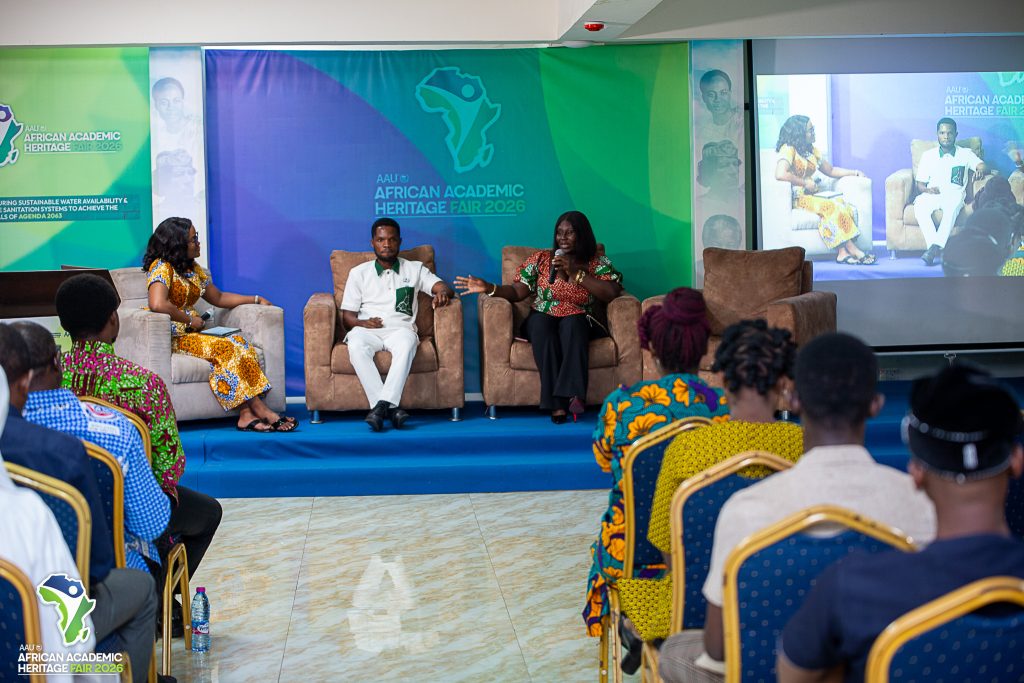
Young people across Africa have been challenged to take the lead in promoting water stewardship, resilient communities, and safe sanitation systems as the continent works toward achieving Agenda 2063.
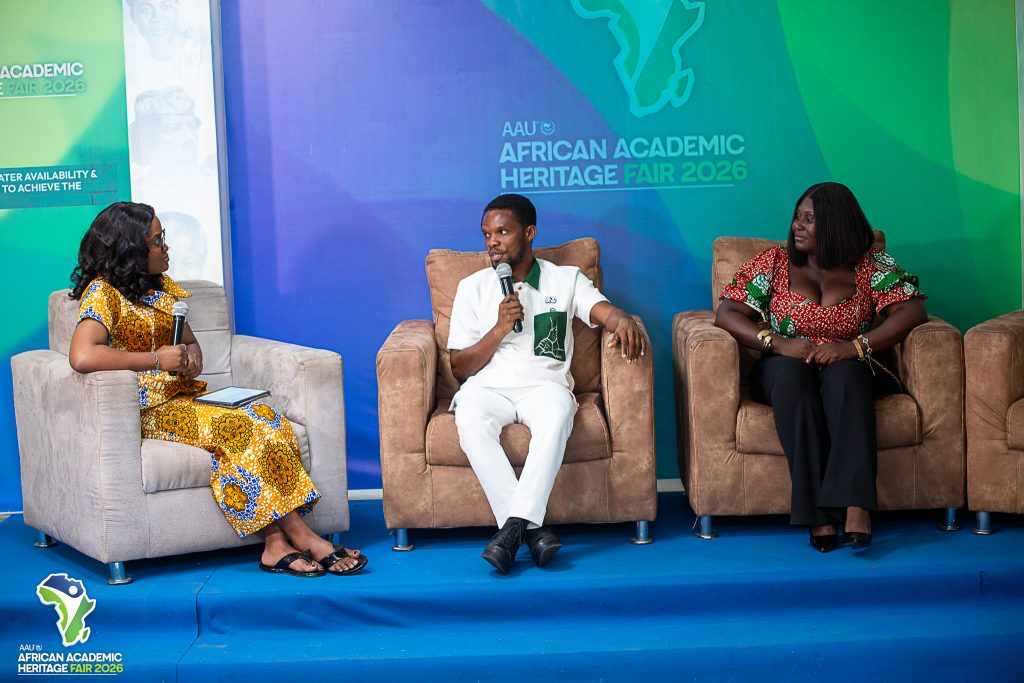
This call was made by a youth panel convened during the African Academic Heritage Fair hosted by the Association of African Universities, to mark African Union Day, 2026. Under the theme “Assuring Sustainable Water Availability and Safe Sanitation Systems to Achieve Agenda 2063”, the session brought together youth leaders and environmental advocates to discuss the growing water and sanitation crisis facing many African communities and the role young people must play in addressing it.
The discussion was moderated by Jemima Deladem Dotsey, of the AAU. Panelists included Heneba Kwadwo Safo, Founder of Buzstopboys, and Chloe Akua Sarfoa Amoah, Chairperson of the United Nations Youth Organization Ghana.
Drawing on her recent medical outreach in Northern Ghana, Chloe Amoah detailed the lived realities of water insecurity: inadequate access to clean water, poor road infrastructure among others. She observed that many individuals underestimate the severity of the crisis because they have never directly experienced such conditions – a gap in experiential knowledge that hinders broader advocacy.
Heneba Safo, on the other hand, attributed a portion of Africa’s sanitation challenges to the erosion of indigenous environmental practices and communal accountability. He argued that the gradual decline of volunteerism and collective environmental stewardship, has significantly worsened sanitation outcomes, suggesting that indigenous systems of communal resource management offer lessons worth recovering.
Both panelists concurred that infrastructure and policy alone are insufficient without corresponding shifts in mindset and behaviour. Safo asserted that before systems and policies could work effectively, mindsets of communities and individuals must first be addressed. Amoah reinforced this by citing everyday examples, including the misuse of sanitation facilities in schools and universities, as evidence of a persistent gap between institutional provision and personal responsibility.
The panelists rejected the framing of youth as “future leaders,” instead positioning them as present-day agents of change. With young people constituting substantial demographic majority across Africa, they argued that the continent’s environmental trajectory depends critically on effective mobilization of this cohort.
Social media platforms such as TikTok, Instagram, and X (formally Twitter) were identified as powerful tools for advocacy and awareness creation. However, the panel maintained that online activism must be complemented with grassroots education and sustained community engagement to achieve measurable impact.
Highlighting examples of successful youth-led action, Chloe Amoah spoke about partnerships that organize regular beach clean-up exercises, while Heneba Safo cited the work of Buzstopboys in reducing flooding within a municipality in Accra through community action and environmental advocacy.
The discussion framed volunteering not merely as charitable work but as a meaningful form of leadership and civic responsibility. The panelists noted that volunteering generates social impact while simultaneously building experience, networks, and opportunities for personal growth – outcomes relevant to both individual and institutional stakeholders.
As part of recommendations to African youth, Heneba Safo called for tree planting to become a civic culture among young people, urging every youth to plant at least five trees in their lifetime to help conserve water and reduce environmental degradation. He further called for sustained environmental education campaigns to nurture environmentally conscious future generations. For her part, Chloe Amoah encouraged young people to assume personal responsibility for their environmental footprint and to actively educate families, churches, peers, and communities on sanitation and environmental issues.
The session concluded with a call for young people to intentionally deploy their voices, digital platforms, and community networks to drive sustainable environmental action across Africa. The panel reaffirmed that the water and sanitation agenda cannot succeed without the strategic inclusion and leadership of the continent’s youth population.