
African-Led Water and Sanitation Solutions Take Centre Stage at the Research Pitching Session of an AAU-organised Fair
June 16, 2026
AAU African Academic Heritage Fair 2026 Calls for Stronger Collaboration for Water Security and Sustainable Development
June 16, 2026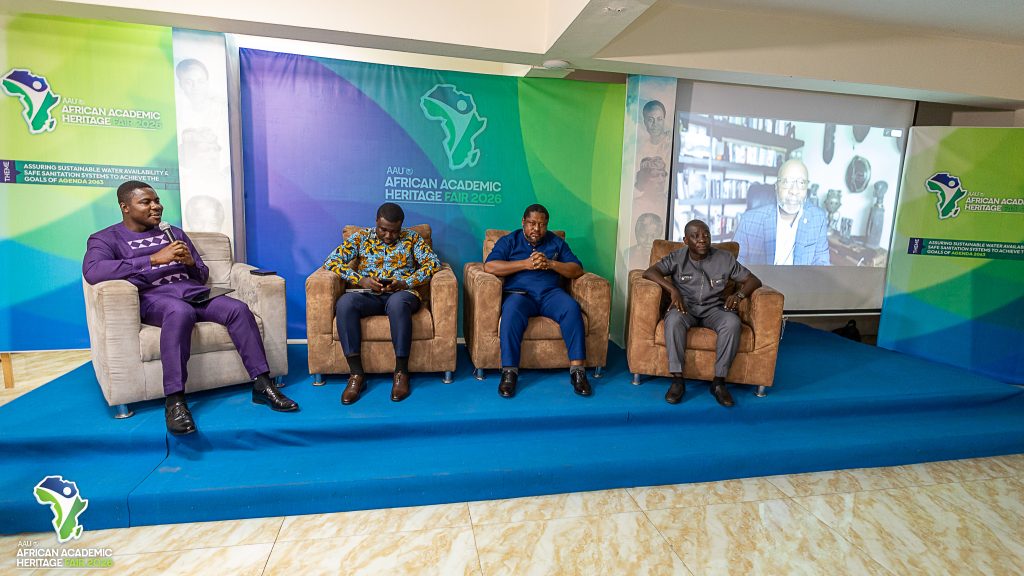
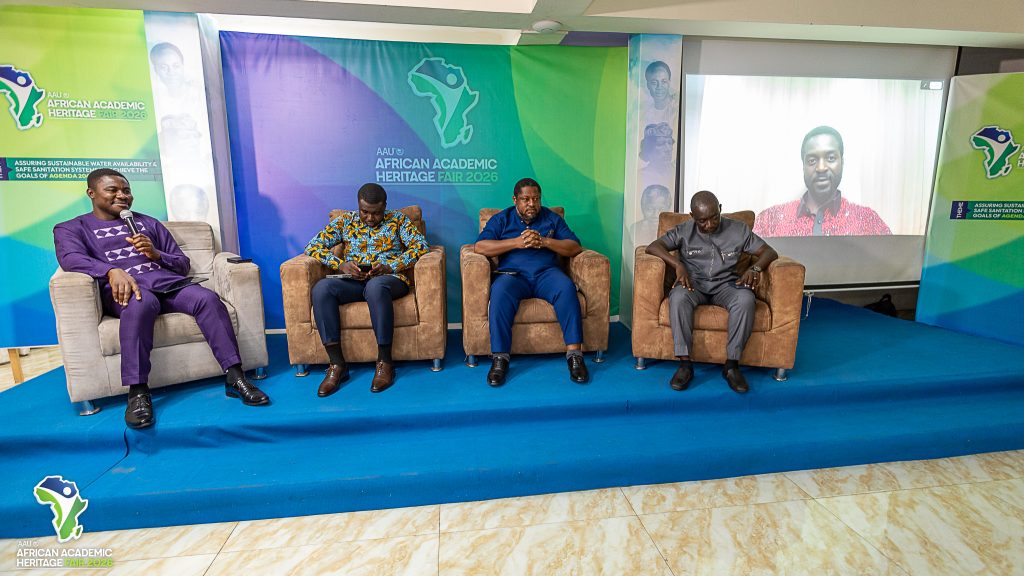
As Africa grapples with the intersecting pressures of climate change, rapid urbanization, population growth, and environmental degradation, water security has emerged as a non-negotiable priority. This was the central focus of a High-Level Dialogue convened during the African Academic Heritage Fair (AAHF 2026) on 25 May 2026, hosted by the Association of African Universities (AAU) in commemoration of African Union Day.
Experts from academia, public health, industry, and global development gathered to examine the theme: “Water Security and Safe Sanitation: The Foundations for Human Capital and Climate-Resilient Development in Africa.” The session offered a rigorous assessment of the continent’s water challenges alongside a strategic pathway towards a more resilient future.
Beyond Access: The Multiple Dimensions of Water Insecurity
While access to clean water remains deficient in many parts of Africa, panellists stressed that water security extends far beyond availability. Increasing threats include pollution, inadequate sanitation systems, weak infrastructure, and climate-related disruptions. The dialogue highlighted how rising temperatures, erratic rainfall patterns, floods, and prolonged droughts are placing unprecedented pressure on water resources. These environmental changes are affecting agriculture, public health, livelihoods, and economic productivity across the continent. Participants emphasized that water security is not merely an environmental concern, it is a development issue with direct implications for health outcomes, educational attainment, food systems, and economic growth.
Environmental Degradation and its Hidden Costs
A particularly urgent concern raised during the session was the impact of illegal mining on water bodies, particularly in Ghana. Prof. Eugene Okyere-Kwakye, Associate Professor, Koforidua Technical University drew attention to the alarming deterioration of rivers and freshwater ecosystems in mining communities. He noted that while many urban residents receive treated water through their taps, the quality of the source water feeding treatment plants continues to decline. The consequences are far-reaching. Toxic chemicals, sedimentation, and pollution are driving up water treatment costs while simultaneously degrading ecosystems and threatening public health. Panellists warned that contaminated water sources could have long-term implications for maternal health, child development, and community wellbeing.
From Waste to Resource: Opportunities in Water Reclamation
Despite the challenges, the dialogue showcased innovative approaches to wastewater management and water reclamation. Drawing from international experience, Kenneth Dunkin, Member of the Board of Consultants and Advisors, Center for Global Africa shared examples of advanced wastewater treatment systems that transform a former liability into a valuable resource. He described how reclaimed water can support agriculture, environmental restoration, flood management, and other productive uses. His central message was clear: wastewater should no longer be viewed solely as a disposal problem but as an opportunity to strengthen water resilience.
Universities as Engines of Innovation and Action
Panellists argued that universities must move beyond traditional teaching models to become hubs for innovation, research, and practical problem-solving. By equipping students with competencies to tackle climate and sustainability challenges, higher education institutions can help build the next generation of engineers, scientists, policymakers, and entrepreneurs.
The session also called for stronger collaboration between academia, industry, government, and development partners to ensure that research findings are translated into real-world solutions. Given that Africa has one of the world’s youngest populations, empowering young people with knowledge and innovation skills was identified as a critical lever for securing a sustainable future.
Building Climate-Resilient Communities
Climate resilience emerged as a central pillar of the discussion. Speakers underscored the urgent need for investments in climate-smart infrastructure, integrated water resource management, flood control systems, and sustainable sanitation technologies. They emphasized that communities cannot become resilient to climate shocks without reliable access to safe water and sanitation services. From urban centres to rural communities, water security was presented as a cornerstone of adaptation strategies – essential for protecting lives, supporting economic activity, and preserving ecosystems.
A Collective Responsibility
As the session concluded, a unifying message resonated strongly across the panel: solving Africa’s water and sanitation challenges requires collective action. Governments must strengthen regulatory frameworks and invest in sustainable infrastructure. Industries must embrace innovation and environmental accountability. Universities must continue producing and translating research-driven solutions. Communities must adopt responsible environmental practices. And young people must be empowered to lead the transformation.
The dialogue concluded with a call to move beyond conversations toward decisive, implementable actions. Water remains one of Africa’s most valuable resources. Protecting it is not simply an environmental obligation it is an investment in health, human capital, economic prosperity, and the continent’s climate-resilient future.
As Africa charts its development path over the coming decades, the choices made today regarding water security and sanitation will fundamentally shape the wellbeing of generations to come.