From Rhetoric to Reality: AAU Champions Equitable Higher Education at Africa-Europe Forum in Bled
June 16, 2026
AAU Engages Dr. Julius Garvey and Center for Global Africa on Higher Education, AfCFTA, and Pan-African Transformation
June 17, 2026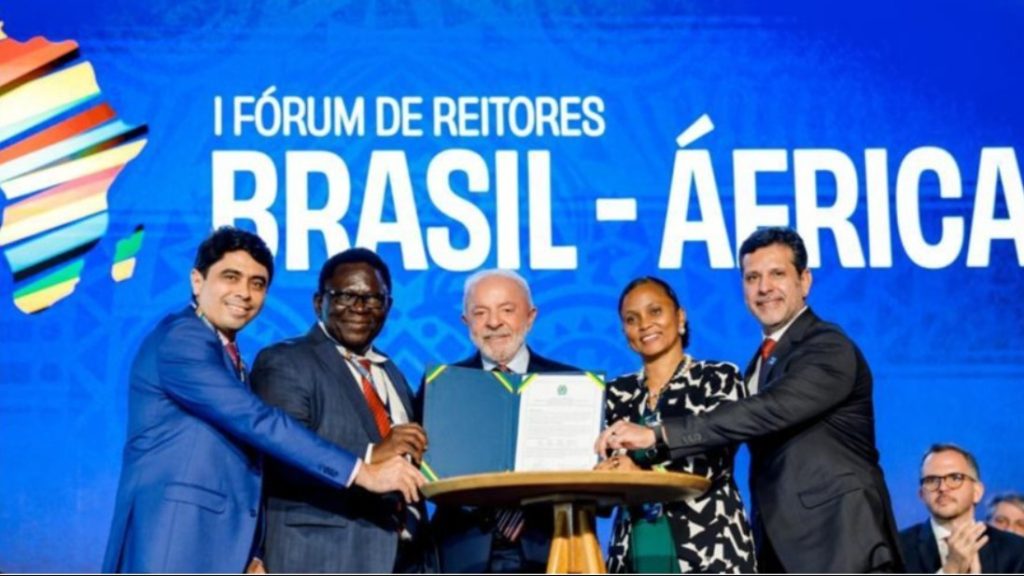
The Association of African Universities (AAU) has reaffirmed its commitment to expanding global partnerships and advancing the internationalisation of African higher education. This commitment was prominently demonstrated through the AAU’s engagement at the inaugural Brazil–Africa Rectors’ Forum, convened in Brasília, Brazil, from 25 to 27 May. Organised by Brazil’s Ministry of Education in collaboration with the Coordination for the Improvement of Higher Education Personnel (CAPES), the Secretariat of Higher Education (SESu), and the National Association of Directors of Federal Higher Education Institutions (ANDIFES), the Forum brought together university rectors, vice-chancellors, and other higher education leaders from across Africa and Brazil to strengthen academic cooperation, foster scientific exchange, and develop strategic partnerships for sustainable development.
The Forum served as a high-level platform to consolidate and expand university partnerships between the two regions; discussions focused on key areas including agriculture, renewable energy, mining, oil and gas, aerospace, artificial intelligence, health systems, climate resilience, and the human sciences. A background assessment presented at the Forum highlighted that there were presently 235 cooperation agreements between Brazilian and African universities, spanning 38 African countries. While these partnerships had created important foundations for collaboration, stakeholders acknowledged significant opportunities for expansion, particularly in underrepresented regions and emerging fields of research and innovation.
AAU’s Strategic Engagement and Keynote Address
Representing the AAU, Secretary-General Prof. Olusola Oyewole delivered a keynote address titled Strategic Knowledge Partnerships for Transformative Africa–Brazil Higher Education Cooperation. In his address, Prof. Oyewole called for a shift from ‘symbolic engagement’ to structured, accountable, and long-term institutional collaboration.
‘This is not an ordinary academic meeting,’ Prof. Oyewole noted. ‘It is a historic opportunity for our regions to move from declarations to institutional commitments, and from isolated initiatives to sustained programmes capable of transforming higher education, research, and innovation.’
Emphasising the longstanding historical, cultural, and educational connections between Africa and Brazil, Prof. Oyewole observed that both regions face similar development challenges and opportunities, particularly in advancing inclusive higher education, reducing social inequalities, fostering innovation, and leveraging research for sustainable development and social progress..
He stressed that Africa–Brazil cooperation must be built on mutual respect, reciprocity, and shared ownership, positioning their HEIs as active co-creators of knowledge rather than passive beneficiaries of international partnerships.
Offering practical solutions, the AAU Secretary-General proposed five priority areas for immediate collaboration: academic mobility and talent circulation; food security, agriculture, and climate resilience; quality assurance and qualification recognition systems; digital transformation and artificial intelligence; and initiatives that strengthen cultural understanding, inclusion, and shared historical memory.
The Forum also provided opportunities for bilateral engagements, networking, and discussions on expanding existing cooperation frameworks. Participants explored mechanisms for strengthening staff and student mobility, joint research programmes, co-supervised doctoral training, and institutional partnerships between and among African and Brazilian universities.
Brazil Announces Capes Move Africa Programme for African Students
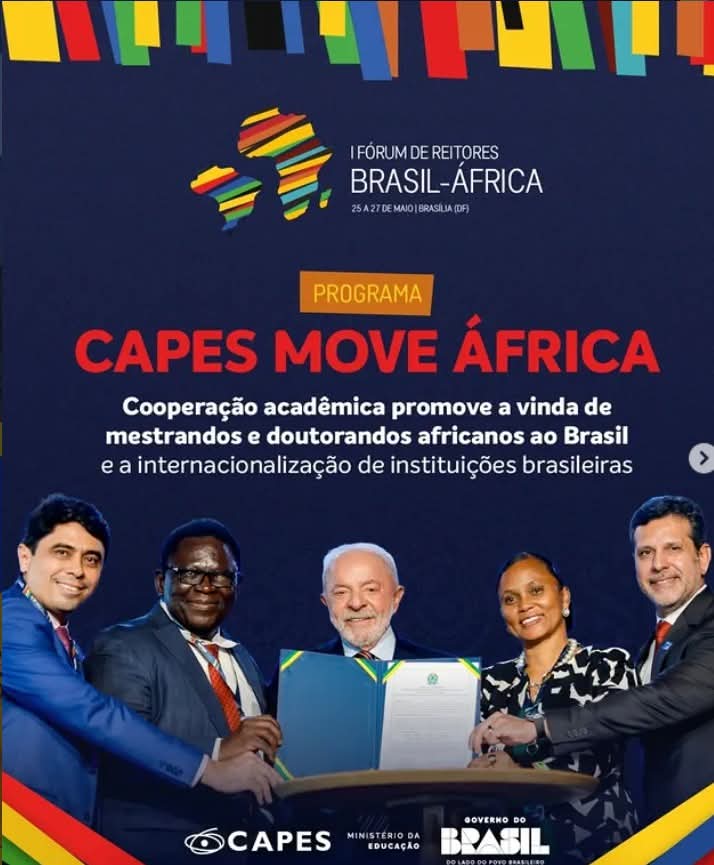
A major outcome of the Forum was the announcement by Brazil’s Ministry of Education of the Capes Move Africa programme. Developed by CAPES, the initiative represents a total investment of up to R$ 47.4 million (approximately USD 9 million) and will create 2,600 scholarships for African master’s and doctoral students to study in Brazil for up to ten months.
The announcement was made during the Forum’s opening ceremony, attended by Brazil’s President Luiz Inácio Lula da Silva; Ministers of Education Leonardo Barchini, Foreign Affairs Mauro Vieira, and Racial Equality Rachel Barros; as well as students, rectors, and academic representatives from both regions. President Lula thanked the African diplomatic corps and noted that the Forum gathered 64 African rectors from more than 30 African countries alongside 70 Brazilian rectors.
“The Capes Move Africa programme will create 2,600 scholarships for African master’s and doctoral students to study in Brazil for up to ten months. Strengthening undergraduate and graduate student exchange programmes will also be essential to consolidate higher education as one of the pillars of the strategic partnership between Brazil and Africa,” President Lula stated.
Minister of Education Leonardo Barchini added: “Opening Brazil’s doors to African students is to further deepen our historical ties, forming research networks, expanding joint publications, and strengthening scientific and productive cooperation.”
The Secretary‑General of the AAU, Prof. Olusola Oyewole, who was present at the announcement, observed that Brazil has supported the training of African students and collaborative research for many years, and that Capes Move Africa represents a significant scaling‑up of that commitment.
From Dialogue to Implementation – A Post‑Forum Roadmap
AAU’s participation in the Forum aligns with its Strategic Plan (2024–2030), which prioritises internationalisation, strategic partnerships, knowledge exchange, digital transformation, and the global positioning of African higher education institutions.
As the continental voice of higher education in Africa, AAU leveraged the Forum to advocate stronger interregional cooperation and promote African universities as key contributors to global knowledge production and innovation.
As a follow-up, AAU will continue working with Brazilian partners, including CAPES, ANDIFES, and other higher education stakeholders, to translate discussions from the Forum into concrete programmes, institutional partnerships, and measurable outcomes that benefit universities and societies in both regions.
The inaugural Brazil–Africa Rectors’ Forum marks an important milestone in the evolving relationship between Africa and Brazil, reinforcing the role of higher education as a catalyst for innovation, sustainable development, and South–South cooperation. For AAU, the Forum represents another step toward building transformative partnerships that empower African universities to address local challenges while contributing to global solutions.