
FOR IMMEDIATE RELEASE: 2026 Africa Universities’ Day to Focus on Building Future-Ready African Universities
October 12, 2026
AfriQAN President Calls for Collective Action to Transform Quality Assurance in Africa
October 14, 2026
Strengthening quality assurance in African higher education is critical to building trust, improving academic systems, and ensuring that qualifications are recognised and valued across borders. This effort aligns closely with the AfriQAN’s target to advance quality and relevance across the continent, particularly through its support for initiatives that strengthen quality assurance and promote greater harmonisation in African higher education institutions. As higher education continues to evolve, effective quality assurance will be increasingly important in maintaining academic standards while supporting greater confidence and cooperation across the continent.
The African Standards and Guidelines for Quality Assurance (ASG-QA) were developed to provide a common framework for strengthening quality assurance practices across the continent. They serve as a shared reference point for higher education institutions and quality assurance agencies, supporting the development of systems that are credible, transparent, and responsive to the changing needs of African higher education.
However, harmonisation does not mean that every country or institution must adopt identical approaches. There is a difference between creating uniformity and creating alignment. The goal of the ASG-QA is to encourage mutual trust among higher education systems while respecting the unique national and regional contexts within which institutions operate.
This distinction is important because Africa’s higher education landscape is diverse. Institutions differ in their structures, policies, resources, and priorities. The ASG-QA provides a foundation that allows these differences to coexist while promoting common principles of quality, accountability, and continuous improvement.
From Framework to Implementation
The effectiveness of any quality assurance framework depends largely on its implementation. Over the years, efforts have been made to move the ASG-QA from a guiding document into a practical tool that institutions and agencies can use to improve their systems.
Through initiatives such as the Harmonisation of African Higher Education Quality Assurance and Accreditation (HAQAA3) Initiative and the Pan African Quality Assurance Alliance (PAQAA) Technical Unit, significant progress has been recorded in supporting the implementation of the ASG-QA. The AAU plays a key role in advancing these initiatives, particularly through coordinating and supporting quality assurance activities, institutional and agency reviews, capacity-building programmes and training designed to strengthen the skills and knowledge of quality assurance professionals across Africa. These efforts have included institutional and agency reviews, capacity-building programmes, and training activities designed to strengthen the skills and knowledge of quality assurance professionals across Africa.
These initiatives have helped institutions and agencies better understand how the standards can be applied within their respective environments. They have also provided opportunities to share experiences, identify challenges, and develop approaches that respond to the realities of African higher education.
Implementation is not a one-time activity. It requires continuous reflection, adaptation, and improvement. As higher education continues to evolve, quality assurance systems must also evolve to address emerging trends such as digital transformation, online learning, blended education, and new models of teaching and learning.
Quality Assurance as a Culture of Improvement
Effective implementation also requires a shift from viewing quality assurance primarily as a compliance exercise towards embedding it as a culture of continuous improvement. Quality assurance should not only be about meeting minimum requirements or preparing for external assessments. It should be seen as a continuous process that helps institutions identify areas for improvement, strengthen academic practices, and enhance the overall student experience.
A strong quality assurance culture requires commitment from all stakeholders. Institutional leaders, academic staff, students, policymakers, and quality assurance agencies all have important roles to play in ensuring that quality becomes embedded within everyday operations.
Strong governance structures, stakeholder involvement, evidence-based decision-making, and effective monitoring systems are essential components of successful quality assurance implementation. When these elements work together, institutions are better positioned to provide education that meets both local and international expectations.

Supporting Mobility and Recognition of Qualifications
One of the major benefits of implementing the ASG-QA is its contribution to improving the recognition of qualifications across Africa.
A trusted and harmonised quality assurance system creates confidence among institutions, employers, governments, and students. It supports greater mobility by making it easier for qualifications obtained in one African country to be understood and recognised in another.
This is particularly important as Africa continues to pursue stronger regional integration and collaboration in higher education. Improved recognition of qualifications can open more opportunities for students, researchers, and professionals while encouraging partnerships among institutions across the continent.
Preparing for the Future of African Higher Education
Looking ahead, the ASG-QA must remain responsive to emerging realities in African Higher education.
The planned revision of the standards in 2027 presents an opportunity to reflect on lessons learned from implementation and ensure that the framework remains relevant. Emerging areas such as digital learning, technological advancement, and changing education models will require quality assurance systems that are flexible and forward-looking.
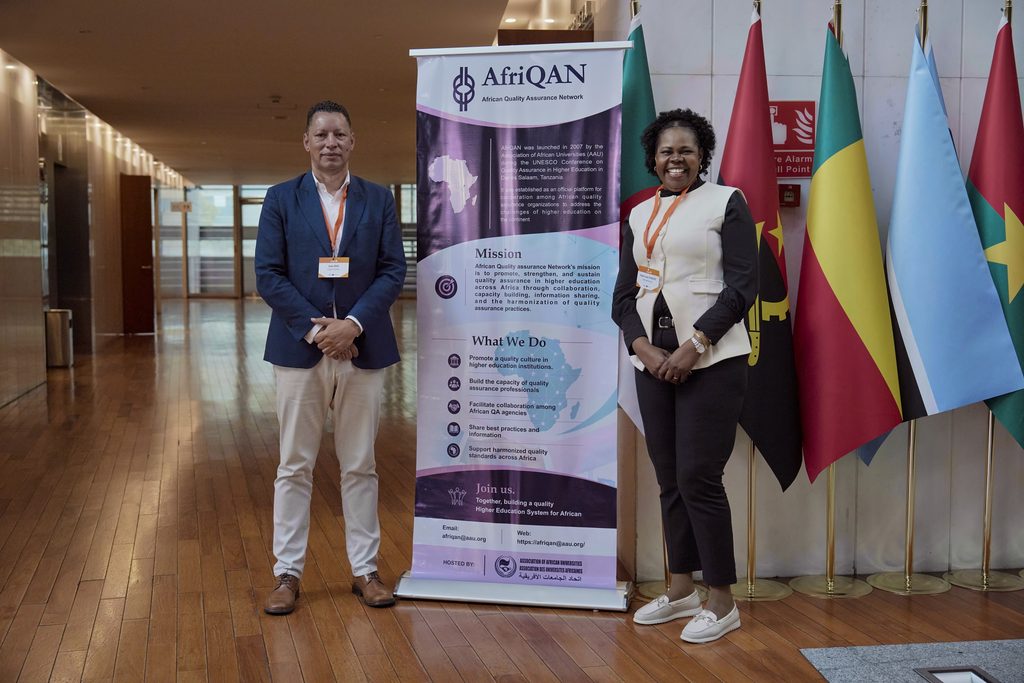
These priorities were also reflected in discussions at the 2026 African Quality Assurance Network (AfriQAN) Annual Conference and General Assembly, where contributors examined the implementation of the ASG-QA and the need for quality assurance systems to remain responsive to changes within African higher education. The discussions reinforced the importance of sustained institutional commitment and collaboration in translating continental standards into practice.
The future of African higher education depends not only on expanding access but also on ensuring that the education provided is of high quality, internationally credible, and aligned with the needs of society.
The implementation of the African Standards and Guidelines for Quality Assurance represents an important step towards strengthening higher education systems across Africa. By translating these standards into practice, institutions and quality assurance agencies can build greater trust, promote continuous improvement, and strengthen cooperation across the continent.