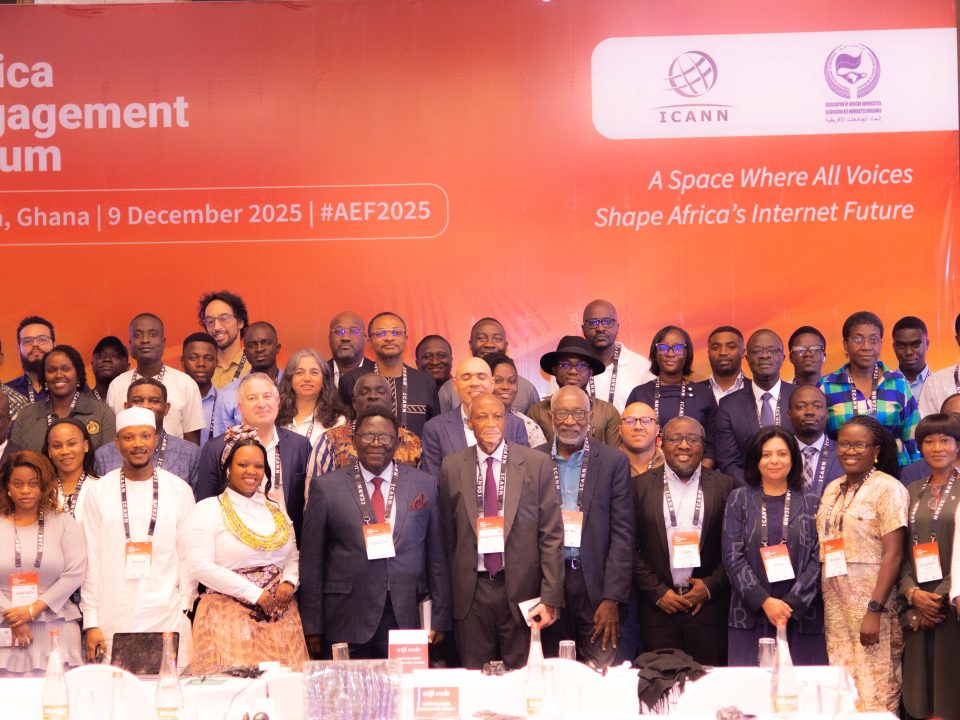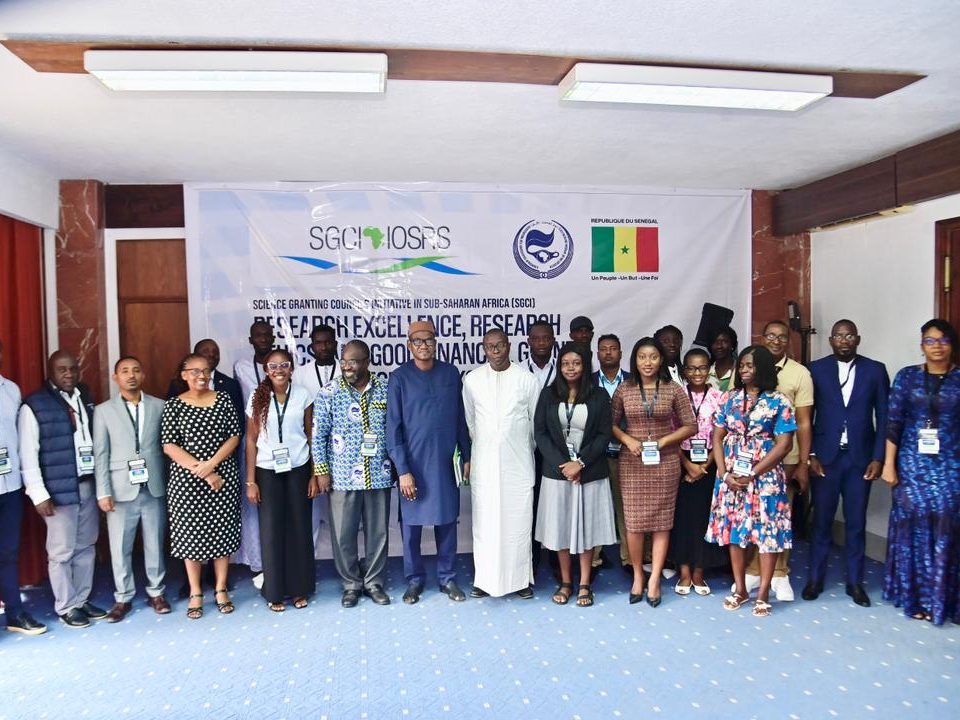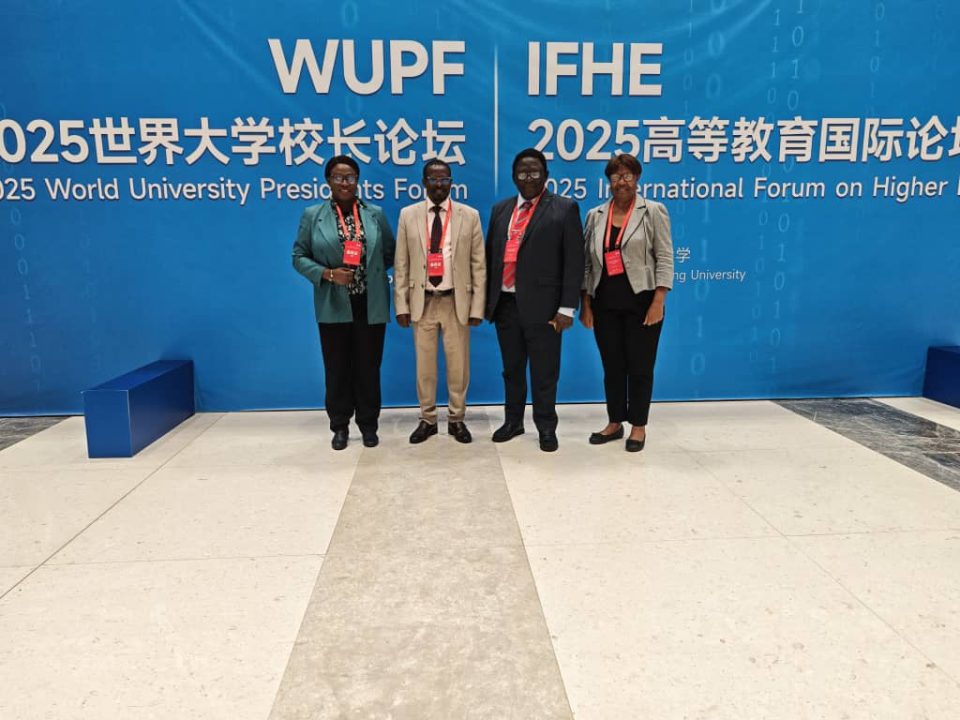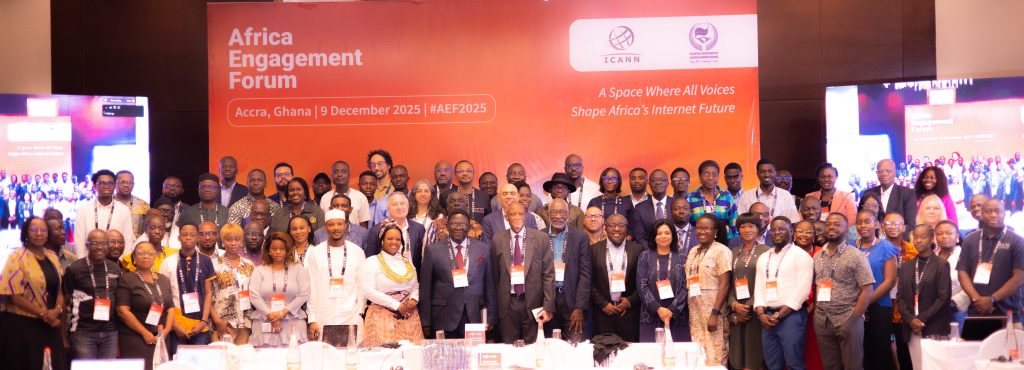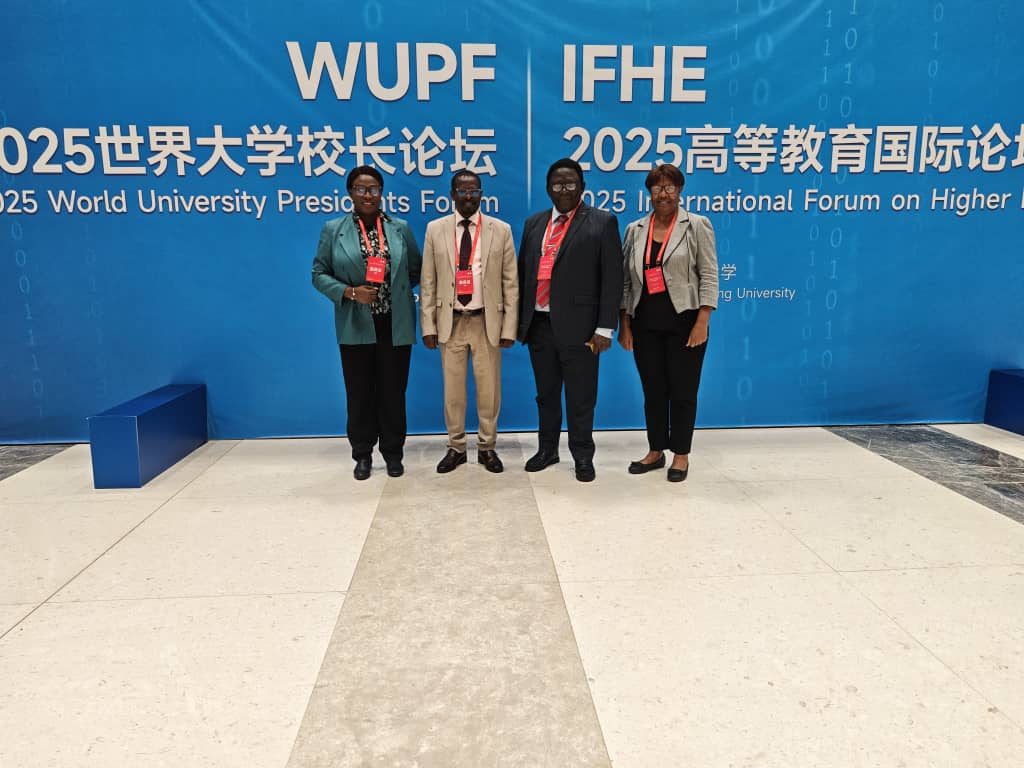

Advancing a Shared Vision: AAU-CAHE Partnership Takes Center Stage at World University Presidents’ Forum
November 10, 2025
ICANN December 2025 Events in Accra
November 25, 2025
Joint statement
November 2025
Exchange and cooperation in higher education and research must be a pillar of the strategic partnership between the African Union and the European Union.
Our two continents’ universities are uniquely positioned to advance shared prosperity and sustainable development, co-create knowledge and contribute to peace and security. This is even more critical in light of the changing global context, marked by accelerated climate and environmental challenges, the increasing gap between Global North and Global South and geopolitical instability, as well as rapidly evolving trade dynamics and disruptors like digitalisation and artificial intelligence.
Therefore the African Union and the European Union need to join forces to create the higher education and research capacities that Africa requires to develop its societies and economies, and to engage in mutually beneficial partnerships with Europe.
Ahead of the seventh European Union-African Union Summit on 24-25 November in Luanda, Angola, the Association of African Universities (AAU) and the European University Association (EUA)[1],which represent the university sectors of both regions, call on African and European leaders to strengthen cooperation in higher education and research, and to include it in all major areas of cooperation.
Recommendations
- Recognise the transversal importance of university cooperation and continue to invest in it
- Continued programming and funding under the Global Gateway is needed to define joint commitments and pool efforts and resources in close and active collaboration with the AU, European governments and partners, and these opportunities need to be better promoted among the academic and economic sectors of both regions. To strengthen and enhance the Global Gateway strategy, we also recommend a thorough analysis to identify lessons learned and assess impact.
- The Africa Initiatives under Horizon Europe, Erasmus+ capacity building measures and international mobility, as well as the Intra-Africa Mobility Scheme, should be strengthened in the EU’s 2028-2034 multiannual financial framework. These measures, as well as Erasmus Mundus and participation in partnerships such as European Universities alliances, complement the Global Gateway.
- Mutual partnerships for the development of higher education and research capacity should be fostered. For example, the Study and Research in Africa Initiative, launched in 2025 under the Youth Mobility Flagship is expected to increase the opportunities for African and European students, researchers and academic staff to build their careers in the African continent, thereby boosting the attractiveness of Africa as a study and research destination, as well as building a knowledge and innovation ecosystem around EU private sector investment.
- Enable interregional exchange and cooperation to develop higher education and research systems
- Initiatives on matters such as quality assurance, recognition, academic career assessment, Open Science etc. need to be part of the long-term strategy. They contribute to mutual learning and understanding, and eliminate obstacles that prevent mobility and cooperation, but also build trust and impact.
- The Youth Mobility for Africa Flagship, which enables exchange and synergies should be continued as a dynamic platform for all major stakeholders.
- Initiatives that drive interregional capacity building in higher education, research and technology transfer should be financially supported and integrated into policy processes to allow for broad dialogue and synergies, scaling and creation of spin-offs and start-ups. HAQAA, which contributes to system-level policies and instruments in quality assurance, recognition and qualifications frameworks in the African higher education space, is a notable example.[2]
- Focus on values-based partnerships
- The EU-Africa Partnership must be values-based: democracy, freedom of speech, citizenship, peace, sustainability, fairness and inclusion should be at the heart of the development strategies of both regions and a clear cornerstone of the partnership in all its areas.
- Respect for the values that higher education and research require to thrive is a prerequisite for further progress. These include institutional autonomy, academic freedom and integrity, equity, diversity and inclusion, and the respect for rights of staff and students.
AAU and EUA reaffirm their commitment to collaboration with governments and other strategic partners and stakeholders, in the interest of an enhanced Africa-EU Partnership. Much has been achieved, but major opportunities still lie ahead.
The context
Over the past decade, both the African Union[3] and the European Union[4] have put a strong emphasis on higher education and research as drivers for the political, economic and social development for their regions.
Moreover, Africa-Europe higher education and research cooperation contributes to regional integration. In a polarised world, the future of Africa and Europe will depend on their ability to cherish their rich diversity and leverage it for scientific, educational, societal and technological development. This will help them to maintain their strategic autonomy, build resilient democratic societies and innovative, sustainable and climate neutral economies.
An integrated higher education space in Africa is also linked to the achievement of an integrated and harmonised labour market, which would also benefit further economic cooperation and development between the two regions. It is also linked to greater knowledge circulation within the African continent and with Europe, thereby addressing skills shortages, combatting long-term brain drain and mitigating migration challenges.
At the previous AU-EU Summit in 2022, heads of state and government made clear commitments towards strengthening higher education and research as central drivers of the Africa-EU Partnership. Since then, the Partnership has made notable achievements that form a solid basis for enhanced education and research cooperation. These include:
- Major progress through the EU’s Global Gateway Africa–Europe Investment Package, including Horizon Europe’s Africa Initiatives that address health, green transition, digital transformation, and science capacity building, aligned with the joint AU–EU Innovation Agenda and the Youth Mobility for Africa Global Gateway Flagship initiative.
- The Youth Mobility for Africa Flagship, which includes programmes like Erasmus+/Capacity Building for Higher Education with more than 50,000 exchanges of students and staff between Europe and Africa, as well as 240 capacity-building projects involving higher education institutions, including in the area of vocational education and training.
- Several Team Europe Initiatives (TEIs), such as Opportunity-driven skills and vocational education and training in Africa (TEI OP-VET),seeking to orient VET and skills development towards concrete and decent employment opportunities, as well as the recent launch of the Africa-Europe Youth Academy, which expands opportunities for African and European students and staff to move, study, and cooperate.
These measures have contributed to enhancing the quantity and quality of Africa-Europe academic mobility and inter-university collaboration, as drivers for integration and development. They promote new approaches and formats, such as the Intra-Africa Academic Mobility Scheme, but also a shift towards more equitable and balanced partnerships, with an enhanced role for African higher education institutions in co-designing and leading projects and initiatives. This helped to build trust and understanding and paved the way for mutual learning.
Similar developments have taken place in region-to-regional higher reform collaboration, resulting in better mutual understanding and use of recognition and quality assurance instruments, based on the work of HAQAA III (Harmonisation, Accreditation and Quality Assurance in African Higher Education) and ACQF II (the African Continental Qualifications Framework). These initiatives also contributed to making Africa a key dialogue partner for the Global Dimension of the Bologna Process.
The European University Association (EUA) is the voice of Europe’s universities, with over 900 members and affiliates in 48 countries.
With about 400 members across the African continent, the Association of African Universities (AAU) is the largest and most comprehensive organisation representing universities and higher education bodies in Africa.
[1] This statement has been jointly prepared by AAU and EUA, in close collaboration with their longstanding partner OBREAL.
[2] HAQAA3 – Harmonisation and integration in higher education to meet Africa’s local, regional and continental development challenges
[3] Cf. Agenda 2063: The Africa We Want., African Union; Continental Education Strategy For Africa 2016 – 2025, African Union
[4] Cf. Competitiveness compass, European Commission; Union of skills, European Commission